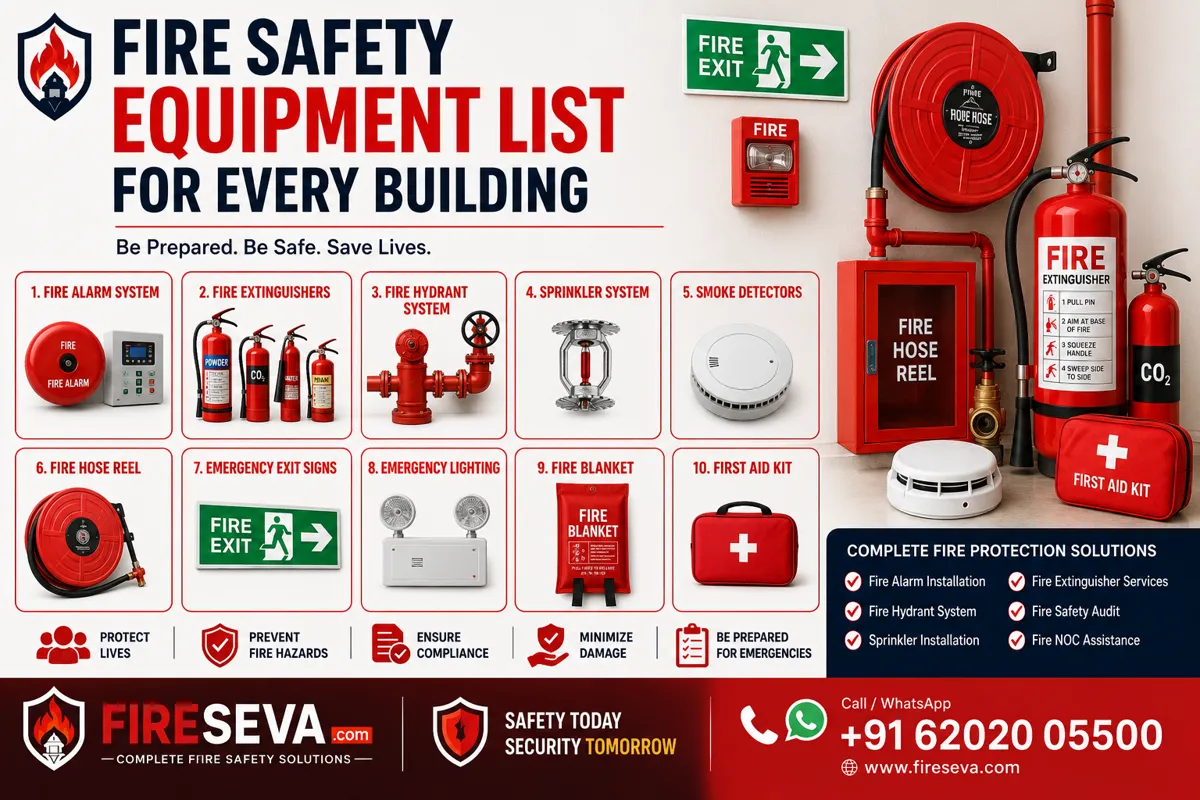
Fire accidents can happen anywhere and at any time. Whether it's a residential apartment, office, shopping mall, hospital, school, warehouse, factory, or industrial facility, having the right fire safety equipment can make the difference between a minor incident and a major disaster.
Many building owners believe installing a few fire extinguishers is enough. However, a complete fire safety system involves multiple layers of protection, including early fire detection, fire suppression, emergency evacuation, and regular maintenance.
If you're planning a new building or upgrading an existing one, this guide explains the essential fire safety equipment every building should have to protect lives, property, and ensure compliance with fire safety regulations.
Why Fire Safety Equipment Is Important
Fire safety equipment helps detect, control, and extinguish fires before they become uncontrollable. It also provides occupants with enough time to evacuate safely while reducing damage to the building.
Installing the right fire protection systems offers several benefits:
- Protects human lives
- Reduces property damage
- Minimizes business interruptions
- Supports faster emergency response
- Helps comply with fire safety regulations
- Improves workplace safety
- Reduces financial losses
Whether your building is residential or commercial, investing in fire safety equipment is essential.
Essential Fire Safety Equipment Every Building Should Have
1. Fire Alarm System
A fire alarm system is one of the most important components of any fire protection plan. It detects smoke, heat, or flames and immediately alerts occupants through sirens and warning devices.
A properly installed fire alarm system helps people evacuate quickly and allows emergency responders to react before the fire spreads.
Fire alarm systems are recommended for:
- Residential Apartments
- Offices
- Shopping Malls
- Hotels
- Hospitals
- Schools
- Warehouses
- Factories
Internal Link
👉 Fire Alarm Installation
2. Fire Extinguishers
Fire extinguishers are the first line of defense against small fires. Different extinguishers are designed for different types of fire hazards.
Common fire extinguisher types include:
- Water Fire Extinguisher
- Foam Fire Extinguisher
- CO₂ Fire Extinguisher
- Dry Chemical Powder (DCP)
- Clean Agent Fire Extinguisher
Choosing the correct extinguisher depends on the type of fire risk present in your building.
Regular servicing and refilling are equally important to ensure the equipment works during emergencies.
Internal Link
👉 Fire Extinguisher Services
3. Fire Hydrant System
Fire hydrant systems are designed to provide a continuous water supply for firefighting operations.
These systems are commonly installed in:
- Commercial Buildings
- Industrial Plants
- Shopping Malls
- Hospitals
- Educational Institutions
- Warehouses
A properly designed fire hydrant system enables firefighters to control large fires efficiently.
Internal Link
👉 Fire Hydrant System
4. Automatic Sprinkler System
Automatic sprinkler systems activate automatically when they detect excessive heat.
Unlike fire extinguishers that require manual operation, sprinklers respond instantly and help contain fires before they spread throughout the building.
Sprinklers are ideal for:
- Hotels
- Offices
- Hospitals
- Warehouses
- Shopping Complexes
- Manufacturing Units
They significantly reduce fire damage and improve occupant safety.
Internal Link
👉 Sprinkler Installation
5. Smoke Detectors
Smoke detectors continuously monitor the environment and detect smoke at the earliest stage of a fire.
Benefits include:
- Early warning
- Faster evacuation
- Reduced fire damage
- Improved occupant safety
Smoke detectors are recommended for homes, offices, hotels, schools, and hospitals.
6. Emergency Exit Signs
During emergencies, people often panic.
Clearly visible emergency exit signs help occupants locate the safest evacuation route.
Emergency exit signs should:
- Remain illuminated
- Be visible during power failures
- Be installed near every exit route
- Meet local fire safety regulations
7. Emergency Lighting
Power failures are common during fires.
Emergency lighting ensures staircases, corridors, and exit routes remain visible even during complete power outages.
This equipment helps prevent panic and injuries during evacuation.
8. Fire Hose Reel
A fire hose reel provides a continuous water supply for controlling fires before firefighters arrive.
It is commonly installed in:
- Commercial Buildings
- Warehouses
- Factories
- Industrial Plants
- Shopping Malls
Fire hose reels are especially useful for Class A fires involving paper, wood, cloth, and similar combustible materials.
9. Fire Blanket
Fire blankets are specially designed to extinguish small fires by cutting off the oxygen supply.
They are commonly used in:
- Kitchens
- Restaurants
- Laboratories
- Industrial Facilities
Fire blankets are also useful for protecting people whose clothing has caught fire.
10. First Aid Kit
Although not designed to extinguish fires, a first aid kit is an essential part of every fire emergency plan.
It helps provide immediate treatment for:
- Minor burns
- Cuts
- Smoke inhalation support
- Emergency medical assistance
Additional Fire Safety Requirements
Apart from fire protection equipment, every building should also have:
- Fire evacuation plan
- Emergency assembly point
- Fire safety signage
- Employee fire safety training
- Regular maintenance schedule
- Fire drill program
These measures improve emergency preparedness and reduce panic during fire incidents.
Importance of Regular Fire Safety Audits
Installing equipment is only the first step.
Regular fire safety audits help ensure:
- Equipment is functional
- Fire exits remain accessible
- Hydrant systems operate correctly
- Fire alarms work properly
- Sprinklers are maintained
- Buildings comply with regulations
Routine inspections reduce the risk of equipment failure during emergencies.
Internal Link
👉 Fire Safety Audit
Fire NOC Compliance
Many commercial and industrial buildings require a Fire No Objection Certificate (Fire NOC) before operations can begin.
Obtaining a Fire NOC involves:
- Building inspection
- Fire safety compliance verification
- Documentation
- Government approvals
Professional assistance makes the process faster and hassle-free.
Internal Link
👉 Fire NOC Assistance
Why Choose FireSeva?
FireSeva provides complete fire protection solutions for residential, commercial, and industrial buildings across India.
Our Services Include:
- Fire Alarm Installation
- Fire Hydrant System
- Sprinkler Installation
- Fire Extinguisher Services
- Fire Safety Audit
- Fire NOC Assistance
Why Customers Trust FireSeva
✔ Experienced Fire Safety Professionals
✔ High-Quality Fire Protection Systems
✔ Timely Installation & Maintenance
✔ Affordable Pricing
✔ Complete Fire Safety Compliance
✔ End-to-End Fire Protection Solutions
Need Professional Fire Safety Solutions?
Whether you're constructing a new building or upgrading an existing one, FireSeva can help you choose the right fire protection systems based on your building type and safety requirements.
Explore Our Fire Safety Services
👉 Fire Alarm Installation
👉 Fire Hydrant System
👉 Sprinkler Installation
👉 Fire Extinguisher Services
👉 Fire Safety Audit
👉 Fire NOC Assistance
📞 For Enquiries, Site Visits & Bookings
Call or WhatsApp: +91 62020 05500
Our fire safety experts are ready to help you protect your building with reliable and compliant fire protection solutions.
Final Thoughts
Every building deserves a reliable fire protection system. Installing essential fire safety equipment such as fire alarms, extinguishers, hydrants, sprinklers, smoke detectors, emergency lighting, and evacuation signage significantly reduces the risk of injuries and property damage during a fire emergency.
Regular inspections, maintenance, and compliance with fire safety standards are equally important to ensure these systems perform effectively when they are needed most.
Whether you own a home, office, factory, warehouse, hospital, school, or commercial building, investing in the right fire safety equipment is one of the smartest decisions you can make.
FireSeva is committed to helping you create safer buildings through professional installation, maintenance, fire safety audits, and Fire NOC assistance.
📞 Need expert guidance or want to book a fire safety inspection? Call or WhatsApp FireSeva today at +91 62020 05500.
Frequently Asked Questions (FAQs)
1. What fire safety equipment is mandatory in a building?
Most buildings require fire alarms, fire extinguishers, emergency exit signs, fire hydrant systems, sprinkler systems, and emergency lighting based on local fire safety regulations.
2. How often should fire safety equipment be inspected?
Fire safety equipment should be inspected and maintained regularly according to applicable fire safety standards and manufacturer recommendations.
3. Are sprinkler systems necessary for all buildings?
Sprinkler system requirements depend on the building type, occupancy, and local fire safety regulations. Many commercial and high-rise buildings are required to install them.
4. Why is a Fire Safety Audit important?
A Fire Safety Audit identifies fire hazards, checks equipment functionality, and ensures the building complies with fire safety regulations.
5. How can FireSeva help protect my building?
FireSeva provides complete fire protection solutions, including Fire Alarm Installation, Fire Hydrant Systems, Sprinkler Installation, Fire Extinguisher Services, Fire Safety Audits, and Fire NOC Assistance to keep your property safe and compliant.